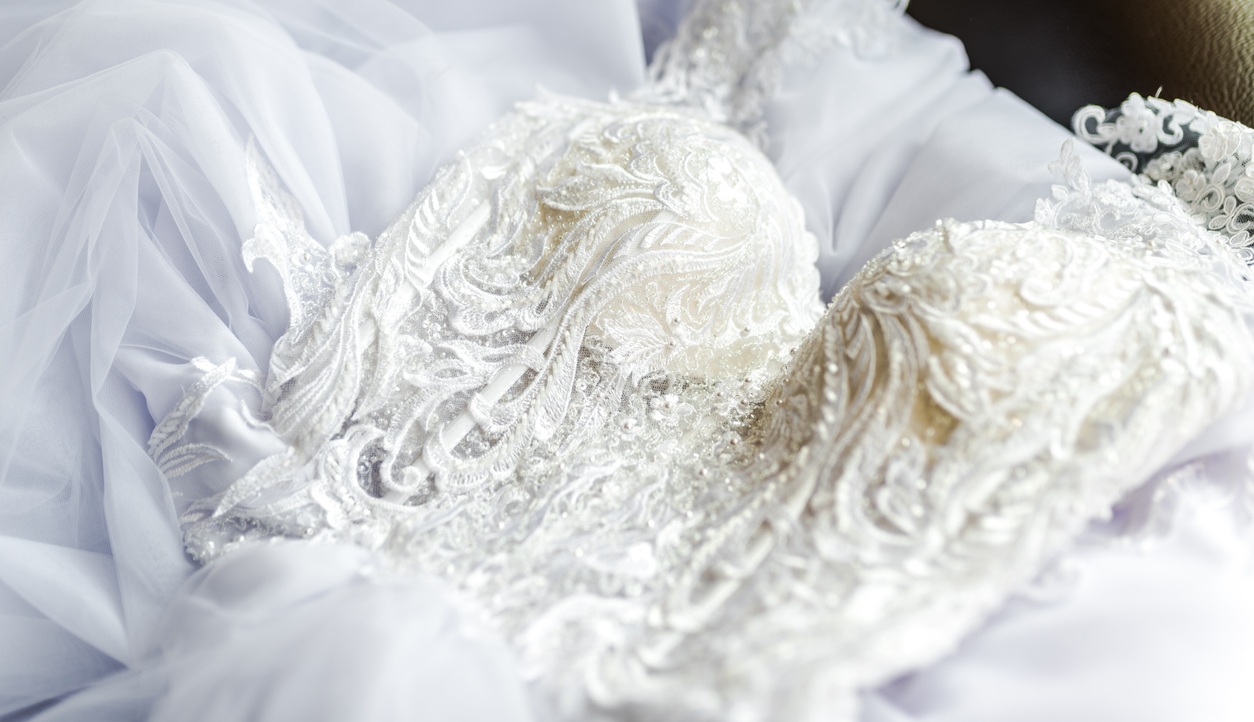
The dress goes into a box or a garment bag, the box goes into a closet or a spare room, and that feels like enough. It is clean. It is out of the way. It is safe.
It is not safe. Not without proper preservation. The most damaging thing about skipping wedding dress preservation is that nothing looks wrong at first. The damage starts invisibly, in residues the eye cannot see, in fibers reacting to air and humidity over months and years, in folds that set permanent creases into silk while the box sits undisturbed. By the time something looks wrong, a significant portion of that damage is already irreversible.
Here are the seven problems our team at Snappy Dry Cleaning sees most often in wedding dresses that were not properly preserved, including those brides wish they had known about before it was too late.
01 Yellowing That Starts Before You Close the Box
This is the most common problem we see, and the most misunderstood. Brides assume yellowing happens because a dress is old. That is only part of the story. The more immediate cause is what remains in the fabric after the wedding day.
Why Sugar Residues Are the Leading Cause of Wedding Dress Yellowing
- Champagne and cake frosting dry colorless but oxidize to yellow and brown within 12 to 36 months
- Heat accelerates oxidation, which is why attic storage produces visible yellowing faster than cooler spaces
- Once oxidation progresses past a certain point, professional cleaning can reduce yellowing but may not eliminate it
- Pretreatment during wedding dress preservation removes these residues before oxidation begins, which is the only reliable way to prevent this outcome
Yellowing that has fully set into silk or satin is one of the harder problems to reverse. Addressing it through proper care for the wedding dress before it starts is significantly easier than attempting correction years later.
02 Hidden Stains That Permanently Set While the Dress Sits in Storage
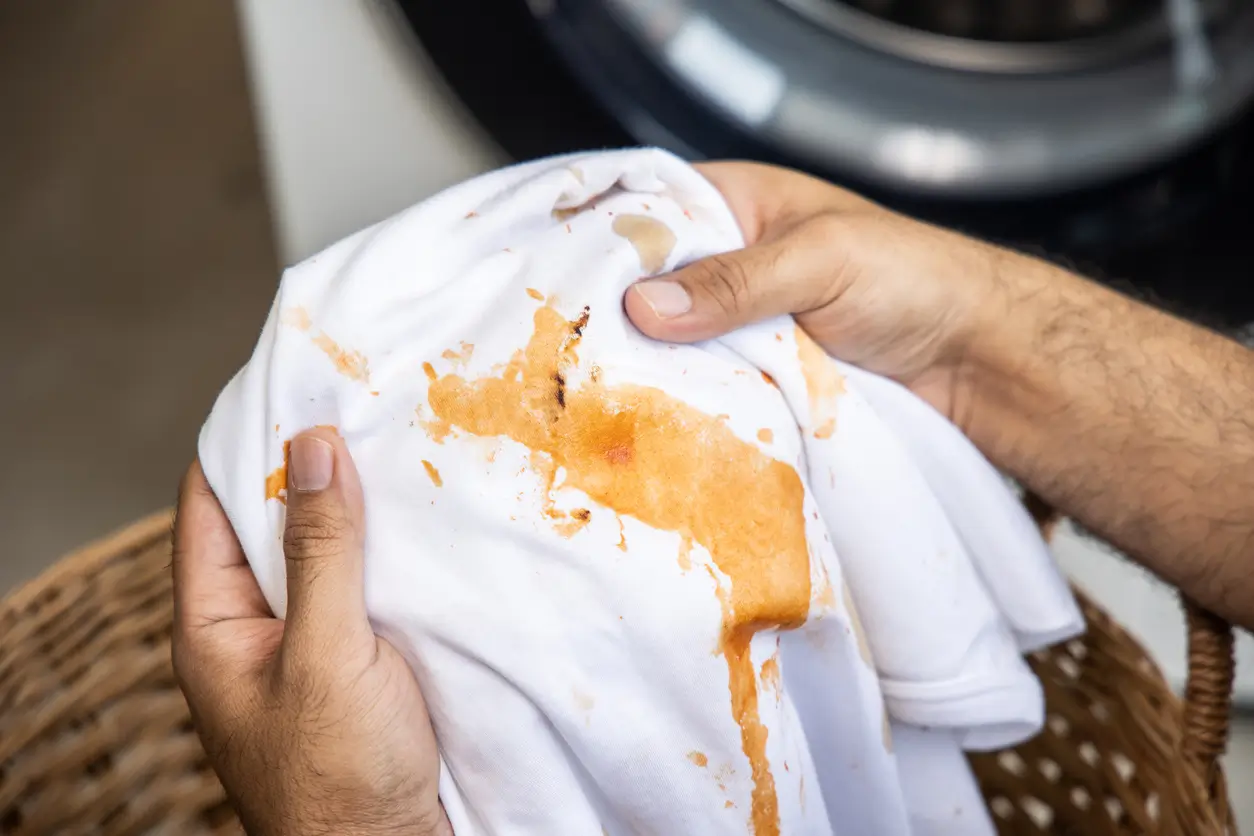
Similar to yellowing but distinct from it, hidden stains come from visible spills that dried clear or nearly clear before you noticed them. Wine, champagne, and certain food dyes behave this way. You wipe the area, it looks fine, and the underlying stain stays in the fabric untreated.
The window for effective stain removal is shorter than most people expect. Certain protein-based stains begin bonding more permanently with fabric fibers within weeks. After several months in storage, especially in a warm environment, those stains may be chemically bonded to the fabric in a way that makes full removal impossible without risking damage to the surrounding material.
How Quickly a Hidden Stain Becomes Permanent
- Sugar stains begin caramelizing and browning within the first few months of storage, often visible around the six-month mark
- Oil-based stains migrate deeper into fabric layers over time, making surface treatment increasingly ineffective the longer they sit
- Pigments from food coloring and makeup intensify with heat and humidity rather than fading
- Stains on silk are particularly time-sensitive because the fiber structure is fine and absorbs contaminants at a molecular level
Taking in a dress for professional cleaning and wedding dress preservation within six to eight weeks of the wedding gives our team the best chance of full stain removal. Waiting a year substantially changes what is possible.
03 Mold and Mildew (and Why This Damage Almost Never Reverses)
Of all the problems on this list, mold damage is the one we want most brides to understand before choosing a storage method. It is also the one most often irreversible.
Mold needs three things to grow on fabric: moisture, darkness, and organic material. A wedding dress packed into a plastic dry cleaning bag and stored in a basement or closet provides all three.
Mold does not always present as visible black or green spots. It can appear as a subtle yellowing, a persistent musty odor, or a faint discoloration that makes the texture of the fabric appear to have changed. By the time those signs appear, the mold has already been active for some time.
The Storage Conditions That Create a Mold Risk
- Plastic garment bags trap moisture against the fabric instead of allowing it to breathe
- Basements and attics experience humidity swings that create ideal mold conditions even without visible dampness
- A dress stored while still slightly damp from cleaning carries a high mold risk regardless of storage location
- Once mold penetrates fabric fibers, structural integrity is compromised even after the mold itself is treated
Professional wedding dress preservation uses acid-free, breathable packaging and stable storage conditions to eliminate these risk factors. Treating mold on a wedding dress after the fact is expensive, inconsistent in results, and occasionally impossible on fine fabrics such as silk and chiffon.
04 Fabric and Fiber Breakdown You Will Not See Coming
Silk, chiffon, and tulle are among the most beautiful fabrics used in bridal dresses and among the most susceptible to degradation from light, air, and temperature change over time.
Silk in particular undergoes a process called shattering when exposed to heat, light, and acidic conditions over the years. The fibers become brittle and split along stress lines, most visibly at seams, fold points, and heavily worn areas such as the hem and underarms. The process is invisible until the fabric literally tears during normal handling. Shattered silk cannot be repaired. It has to be replaced, and matching original bridal silk years later is rarely straightforward.
Where Fiber Breakdown Starts on an Unpreserved Dress
- Fold lines are the first place stress fractures develop, which is why the way a dress is folded matters as much as where it is stored
- Seam stress points accumulate micro-tears from the movement and weight of wearing the dress across an entire wedding day
- Acid from non-archival tissue paper or cardboard packaging accelerates fiber degradation significantly over time
- Indirect UV light exposure breaks down silk fibers faster than most people expect, even through a closet door
Acid-free tissue, archival preservation boxes, and a dark temperature-stable environment are not optional upgrades for a silk dress stored more than two or three years. They are the difference between a dress that holds and one that does not.
05 Discoloration at the Neckline and Underarms
These two areas absorb more residue during a wedding day than anywhere else on the dress. The neckline collects foundation, setting powder, and spray tan product. The underarms accumulate sweat, deodorant, and antiperspirant. By the end of a long wedding day, both areas have significant invisible buildup, even on a dress that looks and photographs perfectly.
Why These Areas Are Harder to Treat Than Ordinary Spills
- Aluminum compounds from deodorant form chemical bonds with fabric dyes that resist standard cleaning approaches
- Foundation and setting powder settle into fine fabric weaves and become harder to lift the longer they remain untreated
- The combination of body heat and chemical residue creates a reaction that continues to progress in storage
- Waiting beyond six to eight weeks substantially reduces what professional treatment can achieve in these areas
06 Permanent Creases From Improper Folding and Storage
This one surprises people because it seems less serious than staining or mold. A fold line pressed into silk or satin under weight over months becomes a permanent crease that professional pressing may soften, but will not always fully eliminate.
The way most dresses come home from a wedding, folded into a bag or box without internal support, creates exactly this problem. Heavy skirts compress against lighter bodice fabrics. Long trains fold at awkward angles. The weight of the dress itself pushes fold lines deeper into the fabric with every passing day.
What Proper Wedding Dress Preservation Packaging Does
- Acid-free tissue is layered at each fold point so fabric bends around a soft surface rather than creasing sharply against itself
- Heavier sections such as skirts and trains are supported separately to distribute weight without concentrating stress
- Preservation boxes are sized to minimize the number of folds required across the full length of the dress
- Dresses are stored flat or boxed rather than hung, because gravity pulling on delicate fabric over months distorts the structure and silhouette
For heavily structured dresses with boning or built-in corsetry, improper folding can also stress the internal construction in ways that affect how the dress sits and fits when worn again, not just how it appears in a box.
07 Damage to Lace, Beading, and Embellishments
Embellishments are the most visually distinctive elements of most bridal dresses and the most fragile in storage. Lace is vulnerable to snagging and tearing when it contacts other fabric layers under pressure. Beads and sequins attached with thread loosen as thread weakens from age, humidity, or acid exposure. Adhesive-applied embellishments can lose their bond entirely in warm or humid conditions.
How Wedding Dress Preservation Protects Embellishments
- Loose or weakened threads are identified and secured before packaging so they do not deteriorate further in storage
- Embellished sections are cushioned individually to prevent contact pressure from loosening beads or snagging lace between fabric layers
- Acid-free materials are used throughout to avoid chemical reactions with metal, adhesive, or dyed embellishment elements
- Potential dye bleed risk areas are assessed and separated before storage begins
A dress with significant beading or lace that goes into storage without proper preservation is at real risk of coming out with both missing embellishments and secondary staining from materials left in direct contact with the fabric.
Your Dress Deserves Better Than a Plastic Bag in a Closet
Every problem on this list is preventable. Yellowing, hidden stain damage, mold, fiber breakdown, permanent creasing, and embellishment loss are all outcomes that professional wedding dress cleaning and preservation is specifically designed to prevent. What it cannot do is reverse damage that has already been set, which is why timing matters as much as the decision itself.
At Snappy Dry Cleaning in Williamsville, New York, wedding dress cleaning and preservation is one of the services we take most seriously. We serve brides across Western New York including Williamsville, Grand Island, and surrounding communities. Every dress that comes in is inspected, cleaned using methods appropriate to its specific fabric and construction, and packaged in archival-quality materials that protect against exactly the conditions described throughout this post.
If your dress is within a few months of your wedding day, now is the right time to bring it in. If it has been longer, bring it in anyway. We will assess what we find and honestly tell you your options before we touch the garment. No surprises and no pressure.