Most of what people believe about dry cleaning didn’t come from a professional. It came from a parent’s laundry room habits, a roommate’s guess, or a care label skimmed in a hurry. Those secondhand “facts” get repeated so often they start to sound true, and nobody ever has a reason to double-check them until something surprising happens, such as a favorite shirt that doesn’t come back the way you expected.
Here’s your chance to check them. Read each one, decide true or false, then see how you did. Straight talk, no lecture, and no judgment either way if you get a few wrong.
Myth 1: “Dry Cleaning” Means No Liquid Is Used
True or false: Dry cleaning gets its name because no liquid touches your clothes.
Verdict: False.
The name is the single most misleading thing about this industry. Dry cleaning swaps water for a liquid solvent, and your garment gets fully submerged and agitated, much like a wash cycle. “Dry” only means dry relative to water, a naming choice that dates back to the 1800s and simply never got updated once modern solvents took over.
Myth 2: Dry Cleaning Is Just Fancy Washing
True or false: Dry cleaning and machine washing do the same job, just with a nicer machine.
Verdict: False.
Water and solvent clean through entirely different mechanisms. Water swells natural fibers, which is exactly why wool shrinks and silk puckers under a washer’s agitation. Solvent doesn’t swell fibers the same way, which is the actual, fiber-level reason care labels split fabrics into “washable” and “dry clean only” in the first place.
Myth 3: The Plastic Bag Is for Storage
True or false: The plastic bag from the cleaner is meant to protect your clothes on the hanger long term.
Verdict: False.
That bag exists for one purpose: getting your garment home without picking up dust or lint on the way. It was never built for long-term storage. Left on for weeks, it traps moisture against the fabric, which is the exact opposite of protection. Pull it off the moment you get home.
Myth 4: If a Stain Doesn’t Come Out, the Cleaner Didn’t Try
True or false: Any stain can be removed if the cleaner is skilled enough.
Verdict: False.
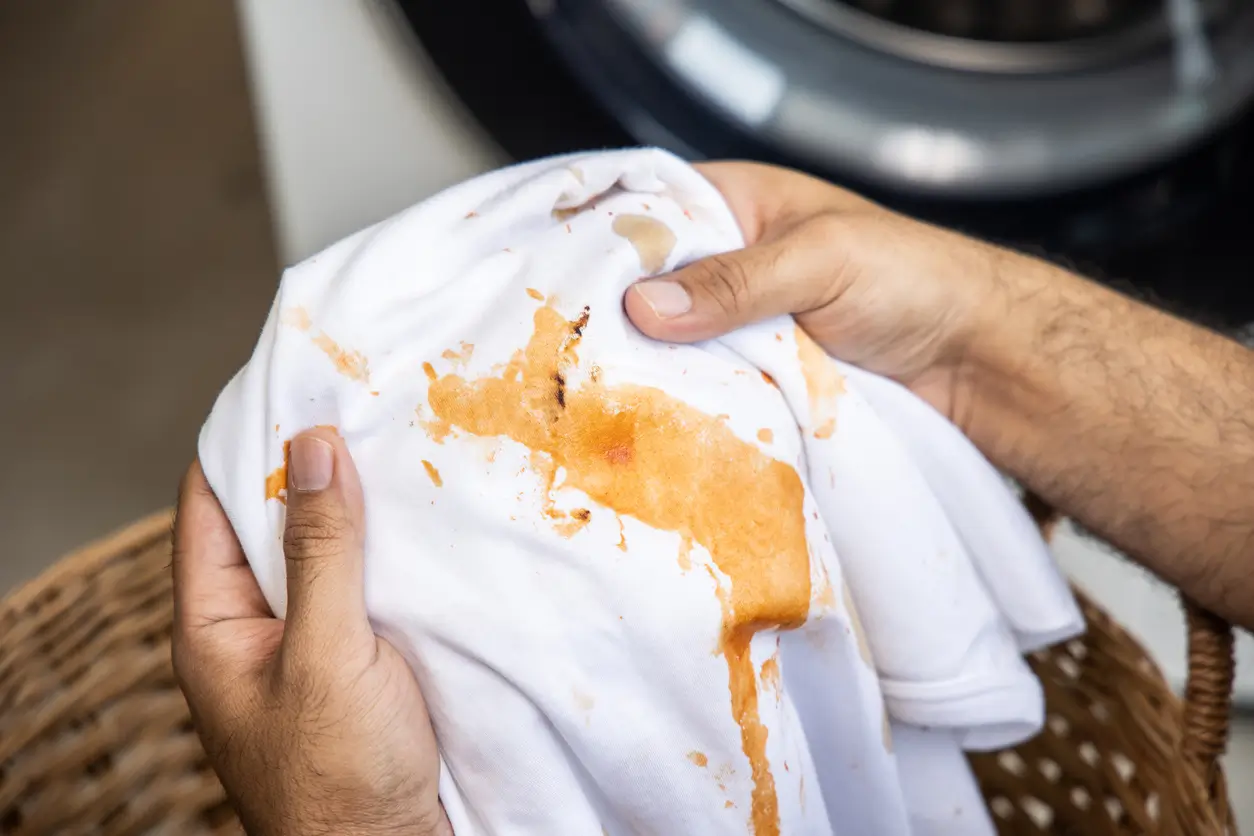
Some stains, set by heat or chemically bonded to certain dyes, are genuinely beyond removal regardless of skill. We covered exactly which stains fall into that category, and why, in a dedicated post worth reading if this one bothers you specifically.
Myth 5: It’s Fine to Wait and Bring in Several Stains at Once
True or false: Batching up a few stained items and bringing them all in together saves you a trip with no real downside.
Verdict: False.
Waiting gives a fresh stain time to oxidize and set further into the fabric. The delay itself is often what makes a stain harder to remove, more than the stain itself ever was. Batching your trips feels efficient. It actually works against you.
Myth 6: Starching Your Clothes at the Cleaner Shortens Their Life
True or false: Having your shirts starched at the cleaner wears out the fabric faster.
Verdict: True, with a caveat.
Repeated heavy starching combined with high-heat pressing can make cotton fibers more brittle over time, since starch coats the fibers and the pressing heat sets it in a way that gradually stiffens the weave. Light or occasional starch isn’t the issue. It’s the combination of heavy starch and frequent hot pressing that adds up over months of the same shirts going through the same cycle.
Myth 7: Dry Cleaning Removes Wrinkles Forever
True or false: Once a garment’s been dry cleaned and pressed, it stays wrinkle-free until you wear it again.
Verdict: False.
Pressing sets a crisp finish at that moment, but it doesn’t change how the fabric behaves afterward. Fold the same garment into a bag, sit in a car for an hour, or hang it too tightly in a closet, and it wrinkles again like any other freshly pressed item. The pressing is a finish, not a permanent property of the fabric.
How Do You Score?
So, how’d you score? If you believed two or three of these going in, you’re not behind on anything. That’s exactly why they’re common myths in the first place, not personal failures of knowledge. These ideas get passed down casually, from a parent or a roommate, and nobody ever circles back to check them against how professional dry cleaning actually works.
If a couple of these surprised you, it’s worth glancing at your closet with fresh eyes. That “dry clean only” tag isn’t the manufacturer being cautious for no reason. It’s a fiber-specific instruction based on exactly the mechanics covered above, whether that’s how solvent behaves differently than water, or how a stain’s timeline affects if it ever comes out at all.
Your Garments Are Valuable – Trust Their Care to Snappy Dry Cleaning
Seven myths down. If any of them made you rethink how you’ve been caring for a garment, professional dry cleaning may be the better next step.
At Snappy Dry Cleaning, we use DF-2000, a synthetic hydrocarbon solvent, as part of our professional dry cleaning process. From frequently worn suits to seasonal coats, each garment is cared for according to its fabric, construction, and cleaning needs.
If you’re in Buffalo, New York, or near our Williamsville or Grand Island locations and looking for professional dry cleaning, bring your garments to Snappy Dry Cleaning and let our team determine the appropriate care from the start.
Grand Island: 2289 Grand Island Blvd., Grand Island, NY, 14072
Grand Island Phone: +1 716-453-1315
Williamsville: 4313 Transit Rd., Buffalo, NY, 14221
Williamsville Phone: +1 716-576-2779
Email: [email protected]