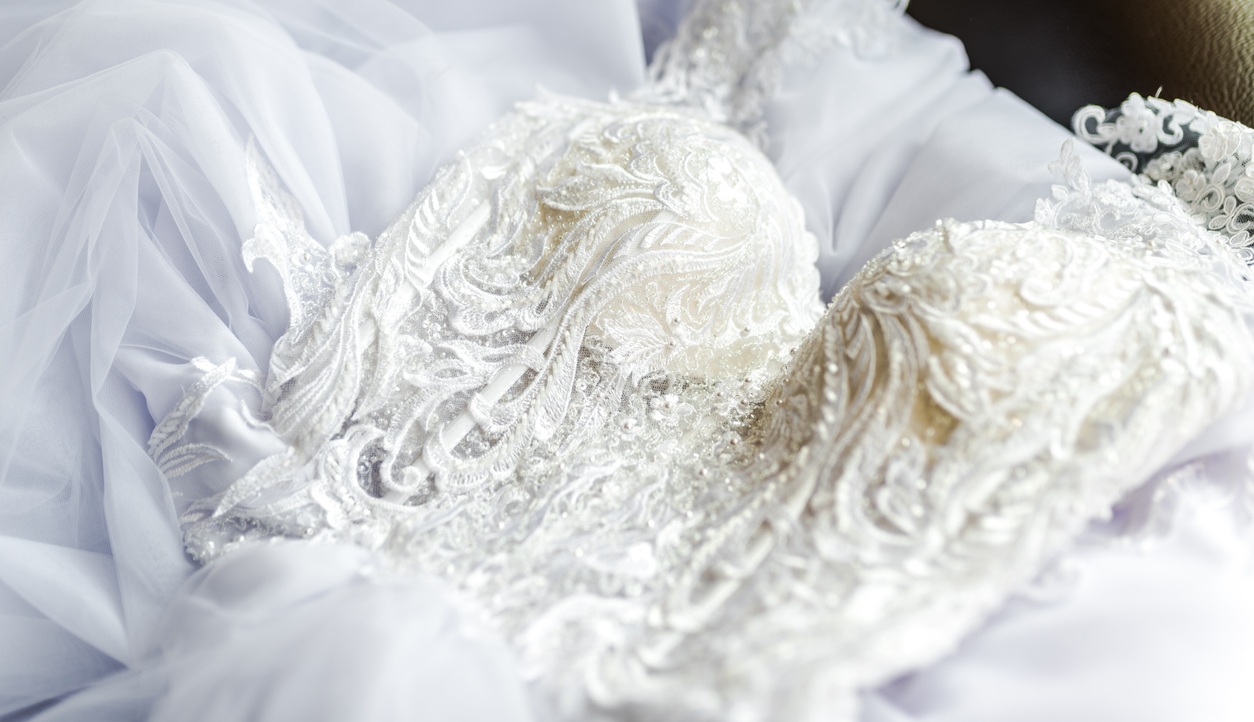
Your wedding dress is probably in a garment bag right now, hanging in a closet you don’t open much, or folded in a box in the guest room. The wedding is over, and life picked back up while the dress just waited. Figuring out what to do with your wedding dress after the wedding rarely happens on the timeline you actually planned.
You’re not doing anything wrong by not cleaning it yet. But how soon you should clean your wedding dress isn’t a question with one answer; it’s a question with a timeline. Some windows of waiting cost you nothing. Others cost you real, visible damage. Here’s what changes at each stage, so you know exactly where your dress stands.
Weeks 0 to 4: The Window Where Waiting Is Genuinely Neutral
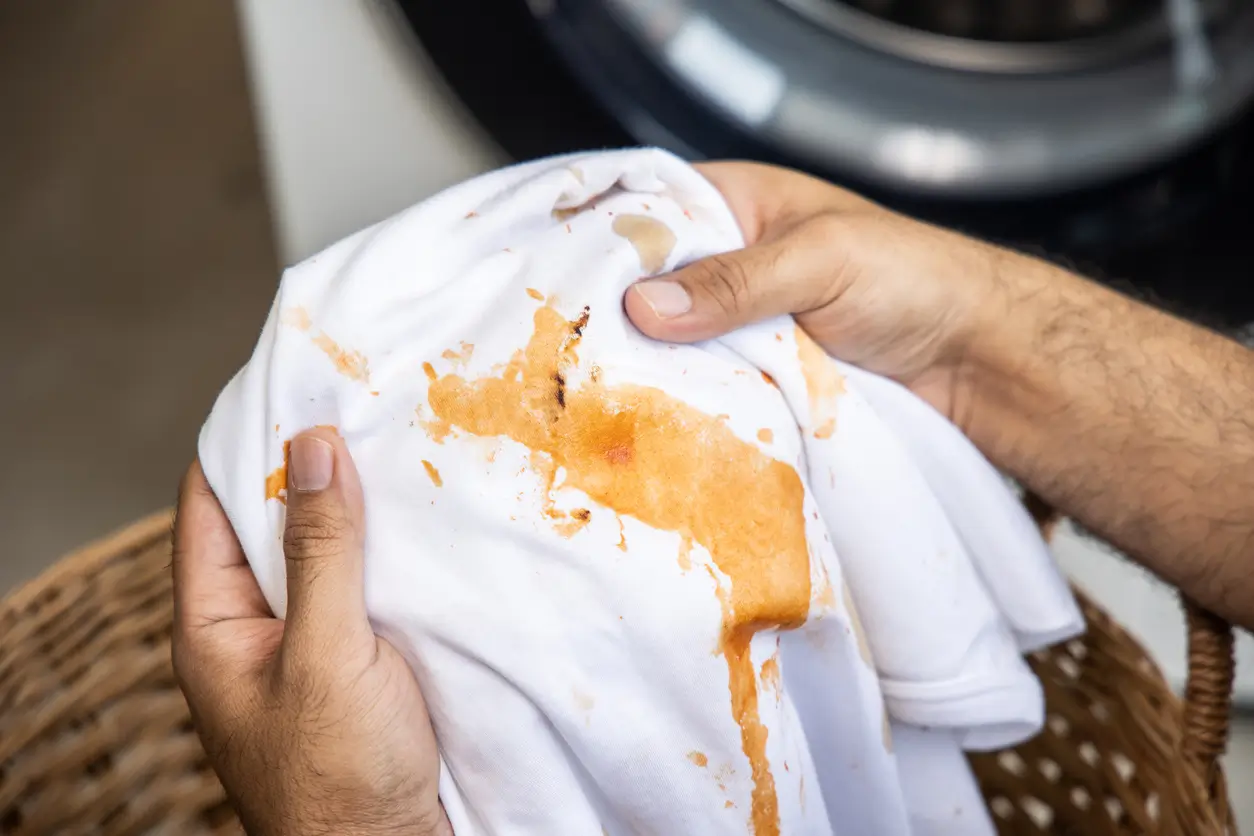
If your wedding was within the last month, take a breath. This window is low stakes. Sugar from cake and champagne is sitting on the fabric, but it hasn’t oxidized yet, so it’s still colorless and still removable. Sweat along the bodice and underarms hasn’t fully set into the fibers. Makeup transfer near the neckline is fresh, not baked in. Grass or dirt at the hem, if there is any, hasn’t ground itself deeper into the weave.
None of that is doing damage yet. It’s just sitting there, waiting for you the same as the dress.
What Neutral Actually Means for Fabric and Residue
Neutral doesn’t mean invisible; it means reversible. A specialist looking at a four-week-old dress and a four-day-old dress will usually see the same treatment plan. The residues are chemically the same; they just haven’t had time to react with the air, light, or fabric. That reaction is what turns an invisible stain into visible, and it hasn’t started yet.
Months 1 to 3: Where Most Brides Land, and What’s Starting to Change
Most delaying brides are searching for answers somewhere in this window. It’s still manageable, but this is where things start to shift from sitting there to reacting. Champagne and sugar residues begin early oxidation. Sweat has set further and takes more work to lift. On silk and satin, faint yellowing can start at the underarms, bodice, and hem.
Professional cleaning still reliably reverses nearly all of this. But reliable isn’t the same as effortless. Every extra week here adds a little more work.
By month three, watch for:
- Faint yellow undertones at the underarms or bodice, visible when held up to light.
- Slightly stiffened or crusted texture where sugar residue sat.
- A muted, off-white cast compared to the original fabric.
Why Champagne Residues Are the First to Show Visible Damage
Champagne and cake residue oxidize faster than almost anything else on a wedding dress. Sugar reacts with oxygen over time and turns into a caramel-toned stain, the same chemistry that browns a cut apple. It’s invisible at first, which is exactly why brides don’t notice it happening, and by the time it shows, it’s already partially set.
That’s why “it looked fine when I put it away” and “it doesn’t look fine now” both can be true.
Months 3 to 6: Where Delay Starts to Cost You
By this point, the calendar has started working against the dress instead of just sitting alongside it. Yellowing that was faint at month three often becomes visible without holding the fabric to light. Set residues are now closer to permanent; cleaning will lift most of the discoloration, but not necessarily all. If the dress has been stored in plastic or cardboard, early storage damage may be layering on top of that.
Professional cleaning can still handle most of it. What changes is the conversation at intake: a three-month dress means talking prevention. A five-month dress means talking about what’s recoverable and what isn’t.
What Changes in the Fabric Itself During This Window
Visible residue is not the only thing that shifts. Fibers under sustained stress from folding, especially at creases, can weaken slightly, particularly in delicate fabrics such as silk chiffon or tulle. This doesn’t mean the dress falls apart. It means the margin for error during cleaning gets thinner, and a specialist has to work more carefully to avoid stressing fabric that’s already been under strain for months.
Beyond 6 Months: Recovery Becomes Uncertain
This is the window where it depends on the honest answer, and it genuinely does depend. Fabric matters: polyester blends hold up better than natural silk. Storage matters just as much; cool, dry, and dark fares far better than a humid closet or sealed plastic bag. And how eventful the wedding was matters, too; an outdoor reception with red wine and a muddy dance floor carries more risk than a controlled indoor event.
Some dresses at this stage clean up close to the original. Others show yellowing, staining, or fiber weakening that can’t be fully undone. There’s no way to know which category yours falls into without a specialist looking at it. Waiting longer doesn’t change the answer; it just narrows the window for whichever outcome you get.
Some Damage Beyond This Point Cannot Be Reversed
Set-in oxidation, deep yellowing, and fiber degradation from prolonged folding stress can all reach a point where cleaning improves the dress without fully restoring it. Not every dress past six months hits this, but enough do that it’s worth saying plainly.
If full recovery matters to you, the version of your dress with the best odds is the one in your closet today, not the one six months from now.
The Storage Conditions That Accelerate Every Timeline
Everything above assumes average storage. Some conditions speed up the entire process, sometimes by months.
- Sealed plastic garment bags trap moisture against the fabric, which accelerates both mildew risk and yellowing, especially in humid climates.
- Cardboard boxes are often acidic unless specifically labeled archival, and that acid leaches into fabric over time, yellowing it from the inside of the storage container rather than from residue.
- Humid closets, particularly basements or rooms without climate control, create the conditions mold and mildew need, and once mold sets into fabric, it’s a different repair problem than residue or oxidation.
Plastic Garment Bags, Cardboard Boxes, and Humid Closets
If your dress has been in any of these conditions, move up your own internal timeline. A dress from a wedding four months ago stored in a humid basement closet may already be closer to the six-month risk profile than the four-month one. The calendar tells you how long it’s been. Storage conditions tell you how fast that time has actually worked against the fabric.
How to Assess Where Your Dress Is Right Now
You don’t need to be an expert to get a rough read on where your dress stands. Pull it out into good light and look.
Three Questions to Ask Before You Decide
- Can you see any yellowing, especially at the underarms, bodice, or hem? If yes, you’re likely past the neutral window.
- Does any part of the fabric feel stiff, crusted, or textured differently than the rest of the dress? That’s often set sugar or sweat residue.
- How has it been stored, and in what conditions? Plastic, cardboard, or a humid space all push your real risk timeline ahead of the calendar date.
None of these answers should stop you from moving forward. They’re simply useful information to bring with you, so the specialist isn’t starting from zero.
What to Do This Week, Regardless of How Long It’s Been
Wherever your dress falls on this timeline, from four weeks to fourteen months, the next step is the same: get it in front of someone who can actually look at it.
- Book an intake appointment rather than continuing to guess from home.
- Take the dress as it is currently; don’t attempt to spot-clean or pretreat it yourself first.
- Ask directly what the specialist sees, and what they recommend given the timeline.
- Decide on treatment once you have an honest assessment, not before.
What a Specialist Will Actually Tell You at Intake
A proper intake isn’t a sales conversation; it’s an inspection. Expect the specialist to check the fabric under strong light, note any visible staining or yellowing, ask about the timeline since the wedding and how the dress has been stored, and give you a direct read on what’s recoverable versus what may be permanent. A good specialist tells you this plainly, before any cleaning starts, not after.
The first job of a specialist is to look at your specific dress, not to run wedding dress cleaning through one fixed process regardless of its actual condition.
Your Wedding Dress Has Waited Long Enough – Take It to Snappy Dry Cleaning
Your wedding dress is more than fabric; it’s a memory, and every week it waits is a week those hidden stains have more time to set. We’d rather you know exactly where things stand than keep wondering.
At Snappy Dry Cleaning, our wedding dress cleaning process starts with a thorough inspection, checking fabric type, existing stains, and any beading, lace, or embroidery that needs specialized handling. From there, we tailor the cleaning to your dress specifically, not a generic routine, so you get an honest read and a plan built around what your dress actually needs.
Bring in your dress this week and let us show you what’s still fully recoverable.
Grand Island: 2289 Grand Island Blvd., Grand Island, NY, 14072
Grand Island Phone: +1 716-453-1315
Williamsville: 4313 Transit Rd., Buffalo, NY, 14221
Williamsville Phone: +1 716-576-2779
Email: [email protected]